
'Probably revised guidelines will come, and then the real picture will emerge.'

A feature of this year's BRICS summit was economic cooperation.

At a time when the government is nudging the private sector to ramp up its capital expenditure (capex), the Ministry of Statistics and Programme Implementation (MoSPI) is poised to kick-start the first-of-its-kind annual survey on the status of private sector capex from next month. "The inaugural edition of the annual exercise will start in October and will be completed by December. "The results will be made public by February next year," said Geeta Singh Rathore, director general, National Sample Survey Office (NSSO), at a data users' conference on Thursday.

Deputy Governor Michael Patra warned about the spillover effects of food inflation.

Buoyed by regulatory overhaul and infrastructure boom, engineering conglomerate Larsen & Toubro (L&T) has identified realty business as one of its growth engines for the next 10 years and plans to acquire land parcels while expanding pre-sales, said a senior company executive. L&T Realty has started looking out to acquire land parcels and grab partnership development opportunities across markets to scale up its business. "We are making some strides in that direction, albeit cautiously.

The World Bank must become Archimedes's lever to help change the world into a more prosperous, inclusive, and sustainable planet in the 21st century. The change in leadership now provides that opportunity, observes Ajay Chhibber.
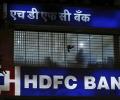
HDFC Bank has reshuffled the portfolios of its senior management team. This is the first major rejig after the amalgamation of HDFC Ltd on July 1. "The runway for our growth is large. This change is being done to bring in a very sharp focus on leveraging what we have built and for enhanced execution," said Sashidhar Jagdishan, managing director and chief executive of HDFC Bank, explaining the reason for this overhaul.

The prime minister sought to allay slowdown concerns saying the fundamentals of the economy are strong, with low inflation and a potential to boost exports.

Amazon Web Services (AWS) will invest nearly $4.4 billion (Rs 36,000 crore) in India by 2030 and support more than 48,000 jobs externally through a new regional service launched on Tuesday, said the on-demand Cloud computing company. AWS Asia Pacific (Hyderabad) is the company's second infrastructure region in India, six years after it opened its first Cloud region in Mumbai in 2016. The Hyderabad region will give customers access to AWS technologies for data analytics, security, machine learning, and artificial intelligence.

According to an industry analyst, the telecom infrastructure sector needs over $20 billion, while the passive infrastructure segment needs an investment of over $12 billion.

Against the Reserve Bank of India's (RBI's) projection of 7.1 per cent, India's first quarter (Q1) 2024-25 (FY25) gross domestic product (GDP) growth came in at 6.7 per cent. This is in line with market expectations and significantly lower than the 7.8 per cent recorded in the fourth quarter (Q4) 2023-24 (FY24) and 8.2 per cent in Q1FY24. The quarter witnessed decreased government consumption and investment spending due to the parliamentary election.

'Over the next 12 months, it will be difficult to make 15 to 20 per cent return in the markets as the valuations appear stretched.'

After the success of the National Highways Authority of India's (NHAI's) first infrastructure investment trust (InvIT) with foreign institutional investors, the Centre is working on a proposal to launch a fresh InvIT for national highways, where domestic retail investors can hold units of the trust

As the FM said, this is a Budget that lays the foundation for the next 25 years, observes Kumar Mangalam Birla.

The World Bank has retained India's economic growth forecast for the current fiscal at 8.3 per cent as the recovery is yet to become broad-based. As per the first advanced estimates of the national income released by the National Statistical Office (NSO) last week, the economy is projected to grow at 9.2 per cent in 2021-22, surpassing pre-COVID level in actual terms, mainly on account of improved performance, especially in farm, mining and manufacturing sectors. "India's economy is expected to expand by 8.3 per cent in fiscal year 2021/22 (ending March 2022), unchanged from last June's forecast as the recovery is yet to become broad-based.

The Reserve Bank of India (RBI) has recognised the Fintech Association for Consumer Empowerment (FACE) as a self-regulatory organisation (SRO) in the fintech sector, the central bank announced on Wednesday. The banking regulator received three applications for fintech SRO. Of the remaining two applications, one has been returned by the RBI with a provision for resubmission after meeting specific requirements, while the third application is still under examination, said Governor Shaktikanta Das at the Global Fintech Fest in Mumbai.

This will be the first full-year Budget of the BJP-led National Democratic Alliance government since it came to power for a third consecutive term in July last year.

'We are confident that over the next few years the government will strike a fine balance between populist measures and growth, and manage coalition partners well.'

Unlike last year, investors turn cautious on e-commerce sector.

'The biggest near-term risk to Indian equities is the outflow of investments to China as tactical trades by foreign investors.'

'The hacker replaced original emails and planted fraudulent emails with a request letter and invoices to be paid to fraudulent bank accounts.'

The most striking features of this Budget was its focus on simplification and improving the ease of doing business in India, asserts Kaku Nakhate.
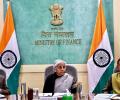
The Budget assumes significance as it comes on the back of lower-than-expected growth numbers during the second quarter and geopolitical uncertainty.

Growth in corporate profits needs to be commensurate with wages to boost the economy, Economic Survey 2024-25 said, noting that sharp disparities between the two pose risk to the economy by curbing demand. The document tabled in Parliament on Friday noted that while the labour share of GVA (gross value added) shows a slight uptick, the disproportionate rise in corporate profitsredominantly among large firmsaises concerns about income inequality.

'It's a clear case of political patronage helping an individual grow.'
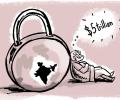
In order to achieve $5 trillion GDP by FY'25, India needs to spend about $1.4 trillion over this period on infrastructure, according to the Economic Survey. During financial years 2008-17, India pumped in about $1.1 trillion on infrastructure. However, the challenge is to step up infrastructure investment substantially, the Economic Survey 2021-22 said.

Encouragingly, the recovery also appears to be becoming broad-based

In the Union Budget for Financial Year 2023-24 (FY24), Finance Minister Nirmala Sitharaman had held forth on the need for better governance and investor protection in the banking sector. She had proposed certain amendments to the Reserve Bank of India Act (RBI Act), 1934; the Banking Regulation Act (BR Act), 1949; and the Banking Companies (Acquisition and Transfer of Undertakings) Act, 1970.

'I don't think we have ever seen such alignment of everything that we need in the banking sector.'

'The choice is clear: We either embrace this transformation and cement our global leadership, or hesitate, lose ground, and fade into irrelevance.'

The sharp pullback in mid and smallcap stocks signals a cooling-off period in segments that previously attracted considerable investor interest.
US-based global investment banking major Goldman Sachs on Tuesday said it would invest one billion dollar in India for expanding operations in sectors like real estate and infrastructure.

Only NIIF has stayed the course as a viable infrastructure financing institution.

The Budget proposals are expected to boost the fortunes of consumer goods and fast-moving consumer goods companies, which have been struggling with poor consumer demand for more than a year. The Budget announcements, such as the increase in standard deduction by Rs 25,000 for income-tax payers and slab revisions, will put more money in their hands, boosting consumer demand. Private consumption is also likely to benefit from a new scheme to offer internships to 10 million youths in the country's top 500 companies.
In this article, we are not going to preach that you should not invest in infrastructure and related funds (haven't we done that many times already?!). So, no preaching here. Only facts. And then, you decide what you want to do with your money.
After facing multiple outages that irked the regulator, the country's largest private sector lender, HDFC Bank, is revamping its technology infrastructure by making large scale investments, wherein it is bringing new talent, getting into cloud-native stacks, a shift from the traditional monolithic IT infrastructures, and working with strategic partners for better products and services. The bank management is clear that it will do whatever it takes in line with its growth path to ramp up its technology infrastructure.

President Droupadi Murmu, in her address to the nation on Republic Day, advocated for the "One Nation One Election" initiative, emphasizing its potential to enhance governance and reduce financial burdens. She highlighted the government's efforts to eliminate remnants of colonialism, citing the replacement of British-era criminal laws with modern alternatives. Murmu also lauded India's economic progress, stressing the importance of inclusive growth and social welfare. She urged citizens to remember the sacrifices of freedom fighters and reaffirmed the significance of the Constitution in guiding India's journey towards a prosperous and equitable future.
The private sector accounted for 30 per cent of all investment in infrastructure in the last Plan period and is supposed to mobilise 50 per cent ($500 billion) of the planned infrastructure spending for 2012-17.

Employees across segments, including those involved in specialised jobs such as technology, compliance and risk management, have started leaving the bank fold in hordes, observes Tamal Bandyopadhyay.
